It is Sunday evening and you have nothing scheduled for tomorrow. You open an AI chat, type "write me 5 Instagram posts about my business," and get five captions that could belong to any company on earth. They start with "Are you ready to..." and end with six hashtags. You post one anyway, it gets three likes, and the whole thing feels like a chore you are losing at.
The problem is not the AI. You asked it to invent a strategy, a voice and a topic in one sentence, from scratch. That produces generic content every time.
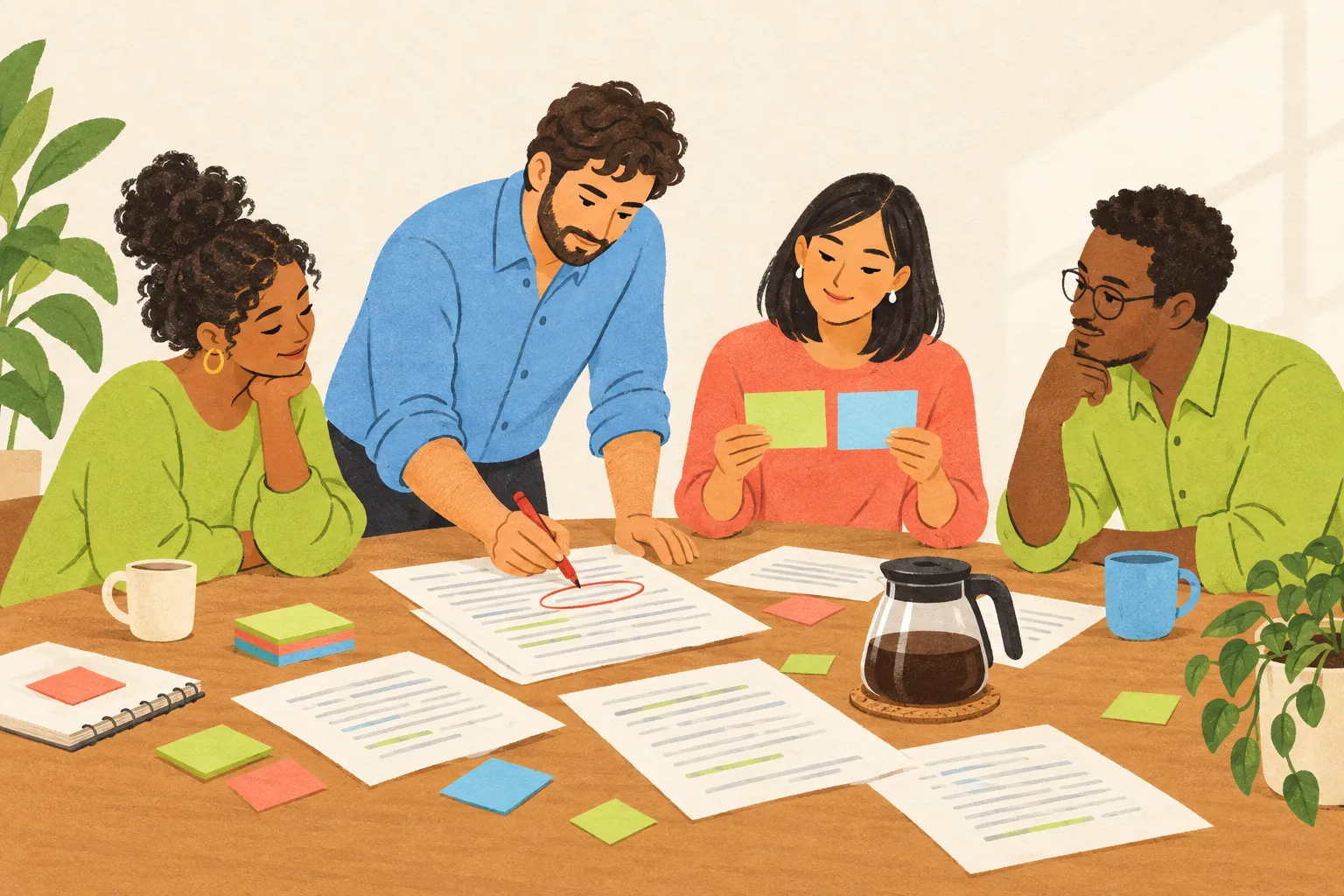
This guide gives you a system instead. You will set it up once (about two hours), then run it every week in roughly 90 minutes: pick an idea, turn it into posts for four platforms, make the visuals, test the hooks, and add the human bits that no model can fake. Every step has a prompt to copy, and one small business runs through the whole process.
Pillars and voice guide
Before you generate a single caption, you need two short documents. They are the difference between "AI content" and your content written faster.
Step 1: Choose three to four content pillars
A content pillar is a recurring theme. Pillars end the blank page and stop your feed from becoming pure promotion. A good set usually covers:
- Teach: practical tips your audience can use today.
- Show: behind the scenes, process, people, mistakes.
- Prove: customer stories, results, before and after.
- Believe: your opinions about your industry, including unpopular ones.
Selling fits inside these (a customer story sells better than an ad). Keep direct offers to roughly one post in five.
Use this prompt in AI chat to draft your pillars:
I run [business] for [audience]. They usually struggle with [problem] and they follow accounts that [what they like]. Suggest 4 content pillars for social media. For each pillar give: a one-line description, 5 concrete post ideas, and one thing I should never post under that pillar. Avoid generic advice. Ask me 3 questions first if you need more context.
Let it ask. Your answers are where the specificity comes from.
Step 2: Write a one-page voice guide
Without a voice guide, every model falls back to the same polite, slightly breathless marketing tone. Keep it to one page:
- Three adjectives for how you sound, plus three you never want to sound like (for example: "direct, warm, nerdy" but never "hype, corporate, cute").
- Words you use and words you ban. Ban the usual suspects: "game-changer", "unlock", "elevate", "Are you ready to", "In today's world".
- Sentence style: short or long, first person or "we", jokes or no jokes, emoji or none.
- Three real posts you wrote that you are proud of. Real examples beat any description.
Here are 3 posts I wrote and liked: [paste]. Here are 2 posts I dislike because they sound fake: [paste]. Write a one-page voice guide for me: tone, sentence length, vocabulary to use, vocabulary to avoid, formatting habits, and 5 rules a writer should follow to sound like me. Be specific enough that a stranger could imitate me.
Save the result. Debatly's personal memory remembers facts about you across chats, so you can tell the assistant your pillars and voice rules once instead of pasting them weekly.
For a second opinion, ask Zoe, the brand strategist which of your pillars a competitor could claim just as easily.
One idea, four platforms
You do not need 20 ideas a week. You need two or three good ideas, each turned into native posts for every platform you use. Same idea, different packaging.
The worked example
Rosa runs Northside Roasters, a small specialty coffee roaster that sells beans online. Her pillars are Teach (brewing at home), Show (the roastery), Prove (customer brews) and Believe (opinions about coffee culture). Her voice guide says "friendly, precise, a little nerdy, no coffee snobbery."
This week's idea, from the Teach pillar: most bitter coffee at home comes from grinding too fine, not from bad beans.
She opens the AI Writer (or a plain chat) with this prompt:
Using my voice guide below, turn this one idea into 4 platform-native posts. Idea: "Most bitter home coffee comes from grinding too fine, not from bad beans." Audience: people who bought good beans and are disappointed at home.
- LinkedIn: 150 to 250 words, first-person story from running the roastery, one takeaway, ends with a question. First two lines must work alone before "see more".
- Instagram carousel: 7 slides, max 12 words per slide, slide 1 is the hook, last slide is a save-worthy summary. Plus a caption under 120 words.
- X: one standalone post under 280 characters, plus a 5-post thread version.
- TikTok: a 3-second spoken hook, a 30-second talking-points outline, and an on-screen caption. Give 3 hook options for each platform. No hashtags yet. [paste voice guide]
What came back (after one round of edits)
LinkedIn opening:
Last month a customer emailed us: "Your Ethiopian tastes like burnt toast." Same bag we'd cupped that morning. It tasted like blueberries. So I asked one question: what grind setting are you using?
It ends with: "What's the one brewing mistake you made for years before someone told you?"
Instagram carousel:
- Your coffee isn't bitter. Your grinder is.
- Too fine = water pulls out the harsh stuff.
- The fix: go 2 clicks coarser.
- Brew again. Taste.
- Still sour? Go 1 click back.
- That's it. That's the whole secret.
- Save this for your next bag.
X post:
Bought expensive beans, coffee still bitter? Usually you're grinding too fine. Go two clicks coarser and taste again. Cheapest upgrade in coffee.
The first draft said "9 times out of 10 you're grinding too fine." Rosa has no data for that, so she cut it to "Usually." Invented numbers slip into AI drafts all the time, and this is exactly the kind of line you have to catch in review.
TikTok hook (spoken, first 3 seconds):
"If your fancy coffee tastes like burnt toast, don't throw out the beans."
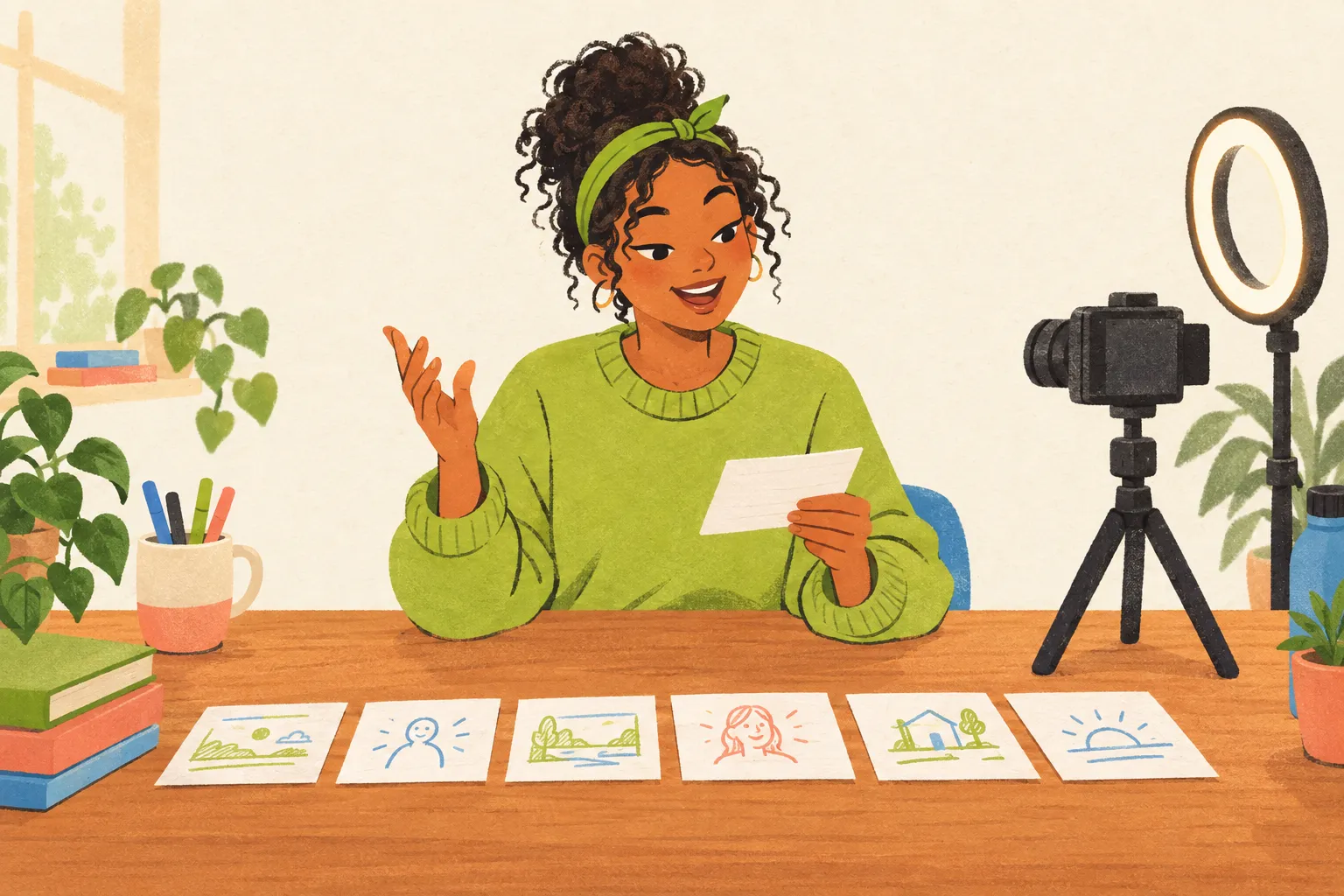
Then the outline: hold up two cups, show the grinder dial, the two-click fix, the taste reaction, a one-line call to save the video.
For longer video concepts, the guide to AI video scripts covers full script structure. You still film it yourself.
Build a hooks library
The hook is the first line on LinkedIn, the first slide on Instagram, the first words on X and the first three seconds on TikTok. It decides whether anything else gets read. Instead of inventing hooks from zero every week, keep a hooks library: a simple doc or spreadsheet of hook patterns that worked for you.
Hook patterns to start with
| Pattern | Template | Northside example |
|---|---|---|
| Surprising cause | "Your [problem] isn't [obvious cause]. It's [real cause]." | "Your coffee isn't bitter. Your grinder is." |
| Specific moment | "Last [time], a [person] told me [quote]." | "Last month a customer said our coffee tasted like burnt toast." |
| Mistake confession | "I did [thing] wrong for [time]." | "I brewed coffee wrong for my first two years as a roaster." |
| Contrarian | "Unpopular opinion: [belief]." | "Unpopular opinion: you don't need a $400 grinder." |
| Before and after | "[Bad state] to [good state] in [small change]." | "Burnt toast to blueberries in two clicks." |
Generate hooks in bulk, then prune
Here is my post: [paste]. Write 15 hooks for it using these patterns: [paste 5 patterns from your library]. Rules: under 12 words, no questions that can be answered "no", no clickbait I can't deliver on, no invented numbers, match my voice guide. Then rank your top 3 and explain why in one line each.
Throw most away. Keep the two or three that feel slightly uncomfortably direct.
Every Friday, note in your library which hooks earned saves, comments or follows (from each platform's own analytics). After a month you will know which patterns work for your audience. Emma, the copywriter is good at tightening a hook that is almost there: paste it and ask her to cut it by a third without losing the promise.
Make visuals that fit
Instagram lives on images, and a strong visual helps everywhere else. Use the AI image generator for three jobs:
- Carousel backgrounds and covers: a consistent style so your grid looks like one brand.
- Concept images: a visual metaphor for the idea (two coffee cups, one dark and cloudy, one clear amber).
- Quote and tip cards: a clean background you put text on in your design tool.
The Instagram post style gives you square, scroll-stopping compositions. For LinkedIn, a clean realistic scene usually beats anything flashy.
A visual prompt that stays on brand
Square image for an Instagram carousel cover. Two ceramic coffee cups side by side on a light oak table, left cup dark and murky, right cup clear amber with a light crema, a hand grinder between them, soft morning window light, muted cream and terracotta palette, lots of empty space at the top for text, no text, no logos.
Two tips that save a lot of regenerating:
- Lock a style sentence. Write one line describing your look ("soft morning light, muted cream and terracotta palette, lots of empty space") and append it to every image prompt. Consistency comes from repetition, not luck.
- Leave room for text, add it yourself. Ask for empty space and add the words in your design tool. You get crisp, correct text and full control over fonts.
The full walkthrough is in how to create AI images.
One honest limit: for "Show" and "Prove" posts, use real photos. A generated roastery or a fake happy customer breaks trust the moment someone notices.
Plan the week in one table
This rhythm assumes two or three ideas across four platforms. Most small brands should start with two platforms.
The weekly routine
| Day | Task | Time | Output |
|---|---|---|---|
| Monday | Pick 2 to 3 ideas from your pillars and a running idea list | 15 min | Idea list for the week |
| Monday | Draft platform posts for each idea with the one-idea prompt | 30 min | 8 to 12 drafts |
| Tuesday | Generate hooks, shortlist, test the best pair in a debate | 15 min | Final hooks |
| Tuesday | Create visuals | 15 min | Carousel, covers, concept images |
| Wednesday | Human pass: add stories, fix facts, cut filler | 15 min | Final posts |
| Wednesday | Load everything into your usual scheduling tool | 5 min | Scheduled week |
| Friday | Note what worked in your hooks library | 5 min | Updated library |
Debatly handles writing, images and testing. Scheduling and analytics stay in the tools you already use.
Example calendar for Northside Roasters
| Day | X | TikTok | ||
|---|---|---|---|---|
| Mon | Grind tip post | |||
| Tue | Burnt toast customer story | Grind fix carousel | Grind fix video | |
| Wed | Story: roasting day | Thread: 5 brewing mistakes | ||
| Thu | Opinion: coffee snobbery hurts small cafés | Opinion post | Reaction to a customer brew | |
| Fri | Customer brew repost (with permission) | |||
| Sat | Weekend brew routine |
Each idea appears on several platforms on different days, and no platform gets more than three posts. Consistency beats volume.
Test hooks with a debate
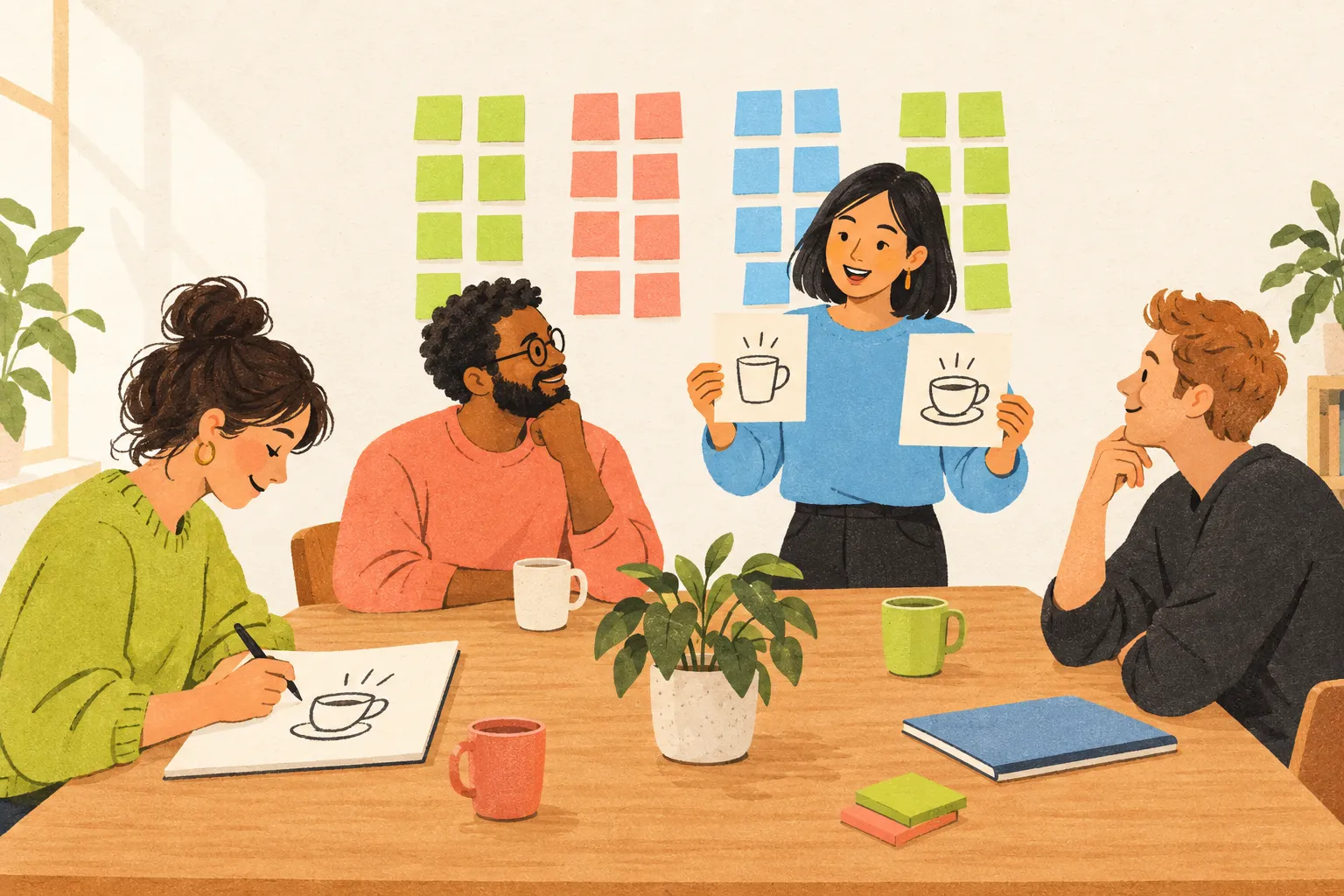
Ask one AI "which hook is better?" and it will politely pick one, then agree with you when you push back. Instead, put your two best hooks in front of several characters who disagree with each other.
Run a Panel debate with your two hooks and the context:
Audience: home coffee drinkers who bought specialty beans and are disappointed. Platform: Instagram carousel cover. Hook A: "Your coffee isn't bitter. Your grinder is." Hook B: "Burnt toast to blueberries in two clicks." Which one earns more saves and why? Consider clarity for a stranger, curiosity, and whether the post delivers on the promise.
In Rosa's test, Hook A was clearer to a stranger scrolling fast, while Hook B was more memorable but only made sense after slide 2. The judge's verdict: A for the cover, B for the X post, where people already follow her and get the joke. That nuance came from the disagreement, not from a single model's opinion.
Useful characters for marketing reviews
You can also chat with these characters directly or bring them into a group room:
- Elena, the brand-obsessed CMO: asks whether the post fits the brand and what it says about you.
- Luca, the growth experimenter: turns "which is better?" into a small test you can actually run.
- Amy, the voice of the customer: reacts like a real person scrolling, which is often brutal and useful.
Save debates for decisions that matter, like the hook on your biggest post of the week or a strategic call:
For the thinking behind this approach, see how to make better decisions with AI.
Keep it human
AI gives you speed. Your audience follows you for what only you have: the customer who called, the mistake you made, the opinion you will defend.
The human pass (15 minutes, every week)
For every post, add at least one of these before publishing:
- A real detail: a name (with permission), a date, a place, a number you actually measured.
- A real opinion: something a competitor might disagree with.
- A real moment: what you saw, heard or felt, in one sentence.
- A real reply plan: decide how you will answer the first three comments.
Common mistakes
- Asking for posts without a voice guide. You get the same tone as everyone else using the same model.
- Posting the first draft. The first draft is the average. Your edit is the point.
- Invented numbers and quotes. AI will happily write "9 out of 10 baristas agree". Delete every statistic you cannot source.
- Same text on every platform. Cross-posting a LinkedIn story to X as-is reads like a press release.
- Too many platforms too early. Two platforms done well beat four done badly.
Quality check before you schedule
Run each post through this checklist (or paste both into chat and ask for pass or fail per line):
- The first line works on its own, with no context.
- It sounds like my voice guide, and a regular follower would recognize me.
- Every fact, number and quote is true and sourced.
- It has one clear idea, not three.
- It includes at least one human detail only I could write.
- Any call to action is small and specific (save, reply, try this).
Should you say that you used AI? There are good arguments both ways:
Start this week
You do not need a content team. You need pillars, a voice guide, a repeatable prompt, a hooks library and about 90 minutes a week. Set up the first two this week, run the routine once, and adjust after Friday's review.
Debatly puts the pieces in one place: AI chat that remembers your voice, the AI Writer for drafts, the image generator for visuals, and AI debates to test hooks and decisions before you post. The guide to chatting with AI will sharpen every prompt here. Get started and run your first week tonight.